A technology incubation studio at the Malawi University of Science and Technology has created a fertile seedbed for students to dream big and develop their ideas into life-saving innovations, our Staff Writer YVONNIE SAKALA reports: The sky is blue and the scorching October sun hangs over Thyolo District. Inside the library auditorium at Malawi University of Science and Technology’s (Must) Ndata Campus are faces filled with anticipation.
The stage is ready and the audience is seated. Outside, teams gather in little huddles, heads close together as they put their minds to one final task: pitching their ideas.
In just five minutes, each team has to explain how their innovation could help address Malawi’s healthcare challenges.
Before them sit judges. Their task is to assess each presentation to determine the 2026 Must Design competition winner.
The first group is called onto the stage. Then another, yet another and some more, please.
“NeoHearScreen is a device designed to test the hearing ability of newborn babies. It is intended to help identify babies who may have hearing difficulties at an early stage, so that they can receive necessary help without delay,” says Sekani Msache.
Next!
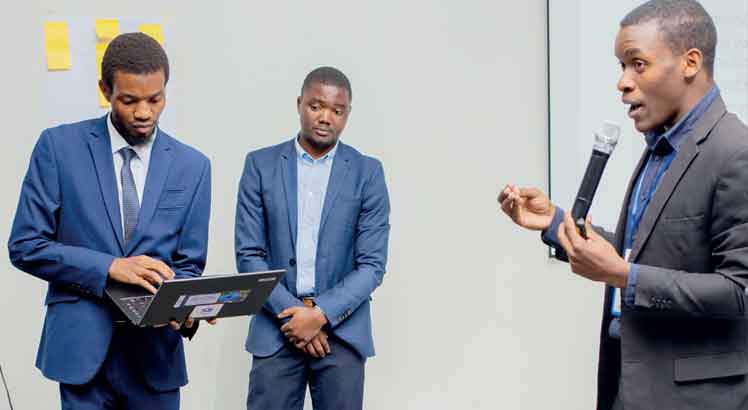
One after another, the 14 teams present and showcase their ideas. At the end of the presentations, NeoHearScreen wins the first prize—a cool K800 000.
But what happens to these innovations when the applauses fade and the prizes are gone? Are they simply ideas born for the competition?
“That is why Must Design Studio exists,” says Nelson Mwenifumbo, the studio manager. “The studio seeks to help students turn classroom ideas into practical solutions. This is where students identify real world challenges, develop ideas, build prototypes and refine their solutions through practical experimentation and mentorship.”
The technology incubation idea started in 2024 as a final year academic project and won the top prize at the Malawi-Liverpool Wellcome Research Programme Innovation Week Pitch Competition.
This Thermolabile drug cooler idea was developed by three students, led by Collings Chatangwa. Their mobile fridge uses grid power, solar energy and a rechargeable battery to store temperature-sensitive medicines, vaccines and research samples while allowing users to monitor its temperature through their mobile phones.
“The idea was inspired by the challenges people with diabetes face in storing insulin at home. We noted a rise in diabetes cases from both rural and urban parts of Malawi and beyond,” he says.
Like insulin and vaccine, some costly essential temperature-senstive drugs perish due to lack of reliable cooling options.
Most existing drug coolers are too expensive or rely on ice pack.
Chatangwa estimates that the cooling device yet to be tested in mobile medical outreaches could keep medicines cool for about eight hours without direct power.
A 2022 study published in Malawi Medical Journal found that some diabetes patients in rural Malawi use clay pots and plastic basins containing wet sand or water to store insulin due to low access to reliable cooling technology.
They cannot tell whether the storage temperature is rising or falling because they have no way of monitoring it. This left participants questioning whether their insulin remained effective under these storage conditions.
The cooling gap affects both rural and urban health facilities.
In September 2025, Unicefm the United Nations Children’s Fund, reported that power blackouts, faulty refrigerators and fuel shortages disrupt vaccine storage in district hospitals. This forces health workers to cancel immunisation sessions leaving mothers who had travelled long distances without vaccinating their children.
Chatangwa hopes the Thermolabile drug cooler could help address the chilling gap. However, the innovation is still at the prototype testing and validation stage.
Its ability to maintain safe temperatures, particularly during power interruptions, will need to be established before it can be used reliably.
“Ultimately, we hope that innovations like the Thermolabile drug cooler will move past being an idea, stretching far to the ordinary people who needs it,” he says.